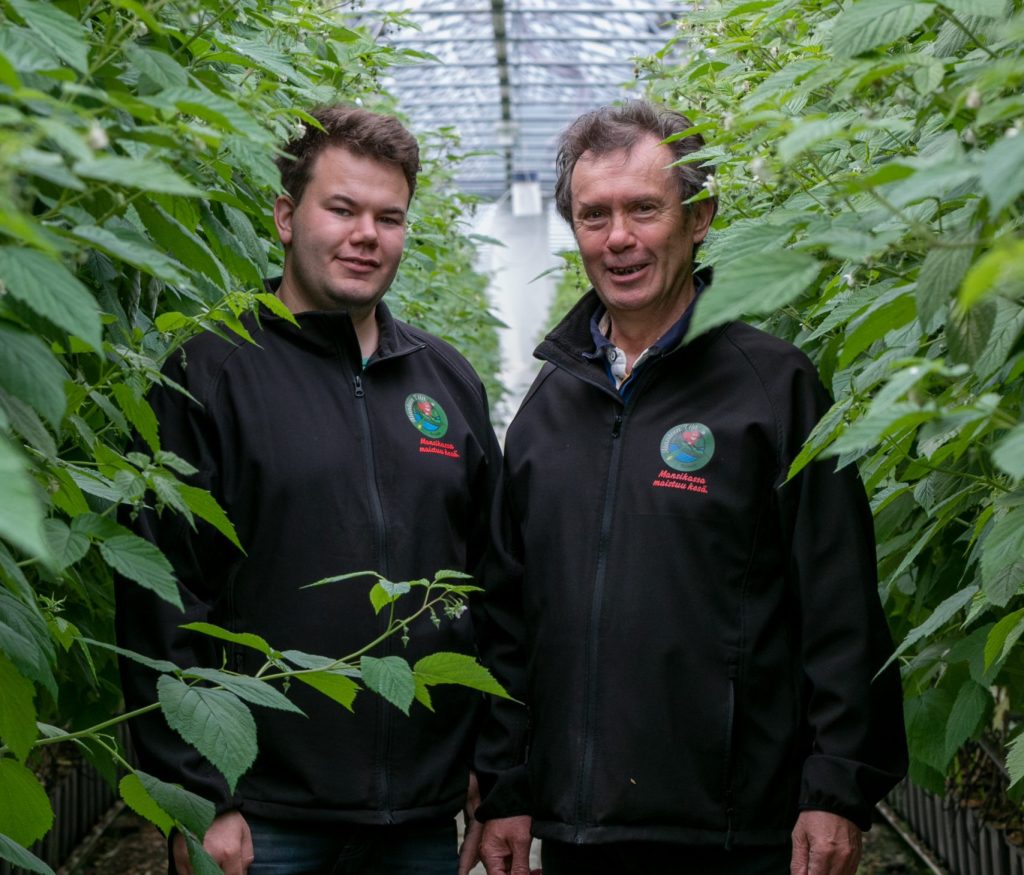
Kosken Marjat Oy, a subsidiary of Alanteen Tila, expanded its cultivation area by acquiring a 6,500-square-meter greenhouse operation in 2025. Kosken Marjat now grows strawberries and raspberries in greenhouses. In Puutarha-Sanomat (4/2026), Aarni Alanne explains that the new cultivation site and earlier production start brought challenges. A solution was sought through oxygen fertilization.
Clean but Oxygen-Poor Irrigation Water
According to Puutarha-Sanomat, the seedlings at the new site initially started growing well, but their vigor faded prematurely. The plants did not develop as expected. Due to weak root formation, the seedlings were unable to absorb sufficient water and nutrients.
The magazine reports that the well water used for irrigation at Kosken Marjat Oy was analyzed and found to be clean, but low in oxygen. This situation is familiar to many growers: groundwater typically contains little oxygen.
Aarni Alanne notes in Puutarha-Sanomat that root development was also weakened by other factors, such as plant diseases, which are partly promoted by oxygen deficiency. Pathogens take advantage of the vulnerability created by a weak root system.
Oxygen Fertilization Restored Seedling Strength Within a Week
After identifying the oxygen deficiency, an EOD Nanoboost oxygen nanobubble generator was installed at Kosken Marjat Oy. The unit is manufactured in Finland and oxygenates irrigation water using nanobubble technology, which stores oxygen in the water in small, slowly dissolving bubbles.
The results became visible quickly. According to Puutarha-Sanomat, within a week of installation, the seedlings’ proper color had returned and they had firmly established themselves in the growing medium.
This change demonstrates how the oxygen content of irrigation water directly affects root system performance. When roots receive sufficient oxygen, they can efficiently absorb water and nutrients, allowing the plant to reach its full potential.
Not All Oxygen Nanobubbles Are Equal
Nanobubble technology has attracted growing interest in horticulture, but there are also misconceptions in the market. EOD’s Sales Director Peter Christiansen explains the difference between nanobubbles as follows:
“The difference between oxygen nanobubbles and air nanobubbles lies in the gases they contain. Air nanobubbles contain, as the name implies, air, which consists of only about 21 percent oxygen and mostly nitrogen. Therefore, they add only a small amount of oxygen that is beneficial to plants. Oxygen nanobubbles, on the other hand, are produced from as pure oxygen as possible, allowing them to contain over 90 percent oxygen and increase the oxygen content of water much more effectively. This is why the same number of bubbles can produce completely different effects on plant growth.”
Service Model Convincing Customers
Kosken Marjat and Alanteen Tila chose EOD’s service model, in which the customer does not purchase the equipment but instead pays a fixed monthly fee for its benefits. This model makes it straightforward to calculate the profitability of the investment, as ROI can be assessed on a monthly basis.
EOD’s first customer in Närpes dates back to 2022, when lettuce grower Conny Söderback Trädgård AB began cooperation under a service agreement. Since then, several similar agreements have been signed both in Finland and internationally. This has been enabled by the advanced automation of the Nanoboost 2.0 oxygen nanobubble generator, whose operation can be continuously monitored around the clock.
“Previously, customers had doubts about new technologies, but in this case the supplier commits to delivering what is promised,” says Christiansen.
Source: Puutarha-Sanomat, No. 4/2026, article “Kosken Marjat keräsi talvituotannosta kokemusta”
Photos: Alanteen Tila
Interested?
Please contact us for further information.