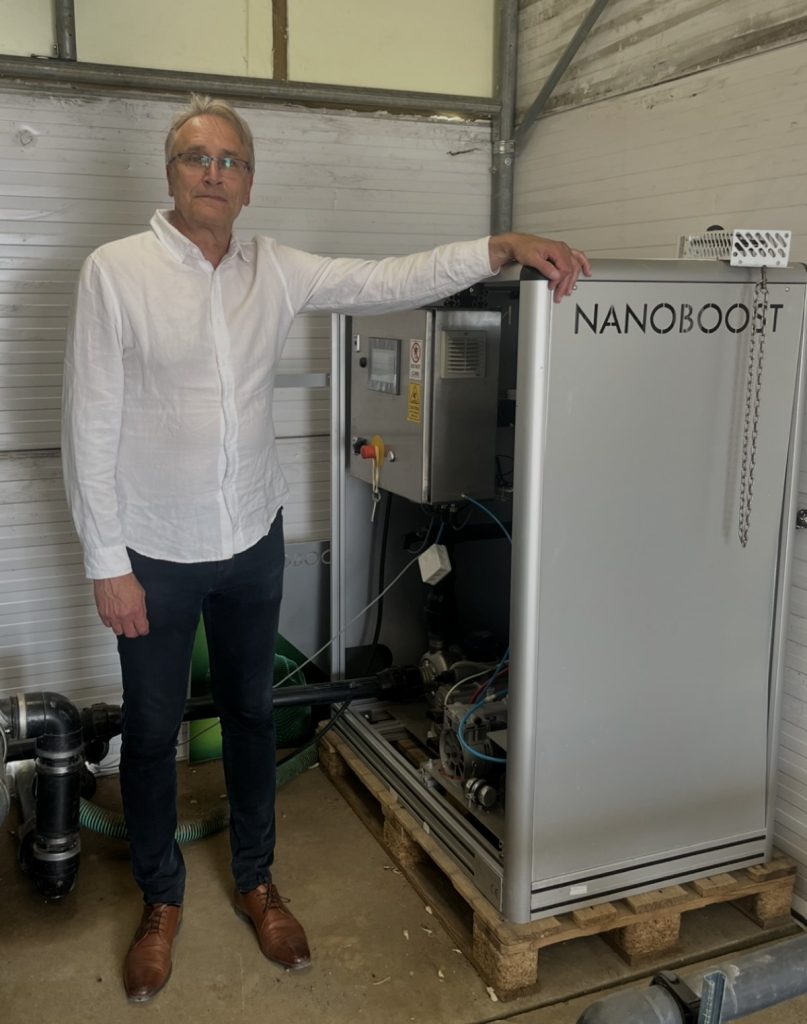
Text: Martti Latva is a Doctor of Chemistry and leads research at the WANDER Research Center, where the benefits and properties of gas-containing nanobubbles have been studied since 2015.
Water is the foundation of cultivation. Without water, plants cannot grow, nutrients do not move, and photosynthesis does not function. Although water may appear uniform at first glance, its properties can vary significantly—differences that have a major practical impact, especially in greenhouse and tunnel cultivation.
The Importance of Water in Cultivation
In everyday language, water is considered a single entity, but in cultivation it often refers to different water sources, such as rainwater, well water (groundwater), surface water (lakes, rivers, ponds), and tap water. These sources can differ in nutrient content, salt levels, pH, microbiology, and dissolved oxygen. These differences directly affect plant health and cultivation efficiency.
For plants, water is not just hydration—it acts as a transport medium for nutrients, a structural component of cells, a temperature regulator, and an enabler of growth. Plant roots absorb water from the soil or growing medium, but they also require oxygen to respire. This is an important but often underestimated factor.
Oxygen in Water
Water can contain oxygen in dissolved form, referred to as dissolved oxygen. With modern nanobubble technology, it is also possible to introduce oxygen-containing nanobubbles into irrigation water. However, not all nanobubbles are equal in terms of oxygen content, which is why a distinction is made between oxygen nanobubbles and air nanobubbles.
Oxygen vs. Air Nanobubbles
The difference between oxygen nanobubbles and air nanobubbles lies in the gases they contain. Air nanobubbles consist of air, which contains only about 21% oxygen and mostly nitrogen. As a result, they provide relatively little plant-beneficial oxygen.
Oxygen nanobubbles, on the other hand, are produced from highly pure oxygen and can contain over 90% oxygen, significantly increasing the oxygen content of water. Therefore, the same number of bubbles can have very different effects on plant growth.
Why Do Roots Need Oxygen?
Plant roots respire like all living cells. They use oxygen to produce energy, actively take up nutrients, and sustain growth. If water or the growing medium lacks sufficient oxygen, roots effectively “suffocate,” nutrient uptake declines, growth slows, and diseases such as root rot become more common.
Greenhouse Cultivation
In greenhouses, conditions are often carefully controlled. Irrigation is typically automated, and closed-loop systems are frequently used, where water circulates. In such systems, water quality becomes critical—especially if the water stands still or recirculates, as oxygen levels can decrease.
Warm water holds less oxygen, and oxygen-poor water can quickly reduce yields. That is why greenhouses may use water oxygenation (aeration), optimized circulation systems, and temperature control.
Factors Affecting Oxygen Levels in Water
Several factors influence how much oxygen water contains:
- Temperature: cold water holds more oxygen than warm water
- Movement: flowing or bubbling water absorbs more oxygen, while stagnant water loses it
- Organic matter: algae, biofilms, and microbes consume oxygen, lowering oxygen levels
- Storage: water stored for long periods in closed containers loses oxygen
DO Measurement (Dissolved Oxygen)
Monitoring water quality is increasingly important in greenhouse and tunnel cultivation. One of the key parameters is dissolved oxygen (DO). DO indicates how much oxygen is dissolved in water and is typically measured in mg/l or percent saturation (%).
In practice, these values indicate how well plant roots receive oxygen through irrigation water.
What Should the DO Level Be?
There is no single perfect value for all conditions, but the following guidelines are commonly used:
| DO Value | Assessment |
| Below 4 mg/l | Clearly too low, risk of root stress |
| 4–6 mg/l | Acceptable but risky in warm conditions |
| 6–8 mg/l | Good level for most crops |
| Above 8 mg/l | Excellent oxygen level |
| 10–14 mg/l | Possible in cold or actively oxygenated water |
Most greenhouse systems aim for at least 6–8 mg/l.
Practical Effects on Cultivation
Adequate dissolved oxygen is visible in cultivation outcomes:
- White, healthy roots
- Efficient nutrient uptake
- Uniform growth
- Improved yields
Low oxygen levels, on the other hand, result in:
- Brown or slimy roots
- Nutrient deficiencies
- Slower growth
- Increased disease risk
What Can Growers Do?
Improving water quality does not always require major investments. Even small actions can make a big difference:
- Avoid prolonged water stagnation
- Use cool water when possible
- Ensure good water circulation
- Avoid over-irrigation
- Keep irrigation systems clean
In more advanced systems, water can be actively oxygenated or aerated using:
- Equipment that produces oxygen nanobubbles
- Oxygen injection from tanks
- Air injection via compressors
In addition, dissolved oxygen can be monitored and irrigation optimized accordingly.
Summary
Not all water is the same in greenhouse and tunnel cultivation. The chemical and microbiological composition, temperature, and especially dissolved oxygen levels directly affect plant health.
In controlled environments like greenhouses and tunnels, oxygen levels in water can be a critical factor for successful yields. Ultimately, the principle is simple: plant roots need both water and oxygen. When these are in balance, both growth and productivity improve.
Research-Based Development – From Practice to Proven Results
What Is EOD Oy – A Finnish Company Focused on Oxygen Nanobubble Technology?
“Our goal is to provide plants with the easiest possible, stress-free growing conditions through preventive measures, thereby improving yield, plant health, and overall cultivation efficiency.
Because our operations are based on scientific knowledge, we invested early on in deep understanding and validation of our technology’s effects. Between 2022 and 2024, we conducted a comprehensive research project in collaboration with Satakunta University of Applied Sciences and plant producers as part of the NABLE project (Enhancing Agricultural Production with Nanobubbles).
The study combined practical cultivation experience with scientific monitoring and analytics. As a result, EOD’s oxygen fertilization system was developed. Its oxygen enrichment method utilizes the most advanced and energy-efficient technology available to increase oxygen levels in irrigation water.
At the same time, we obtained concrete evidence of how oxygen-rich irrigation water and oxygen fertilization support root health and balanced plant growth.” — Henna Niskakoski, Chief Scientific Officer, EOD Oy

Images: EOD archive
Interested?
Please contact us for further information.